
From Emmett
Why raw Iowa honey
Most honey on the store shelf looks the same: golden, runny, a bear-shaped bottle. You can’t tell by looking where it came from or what was done to it.
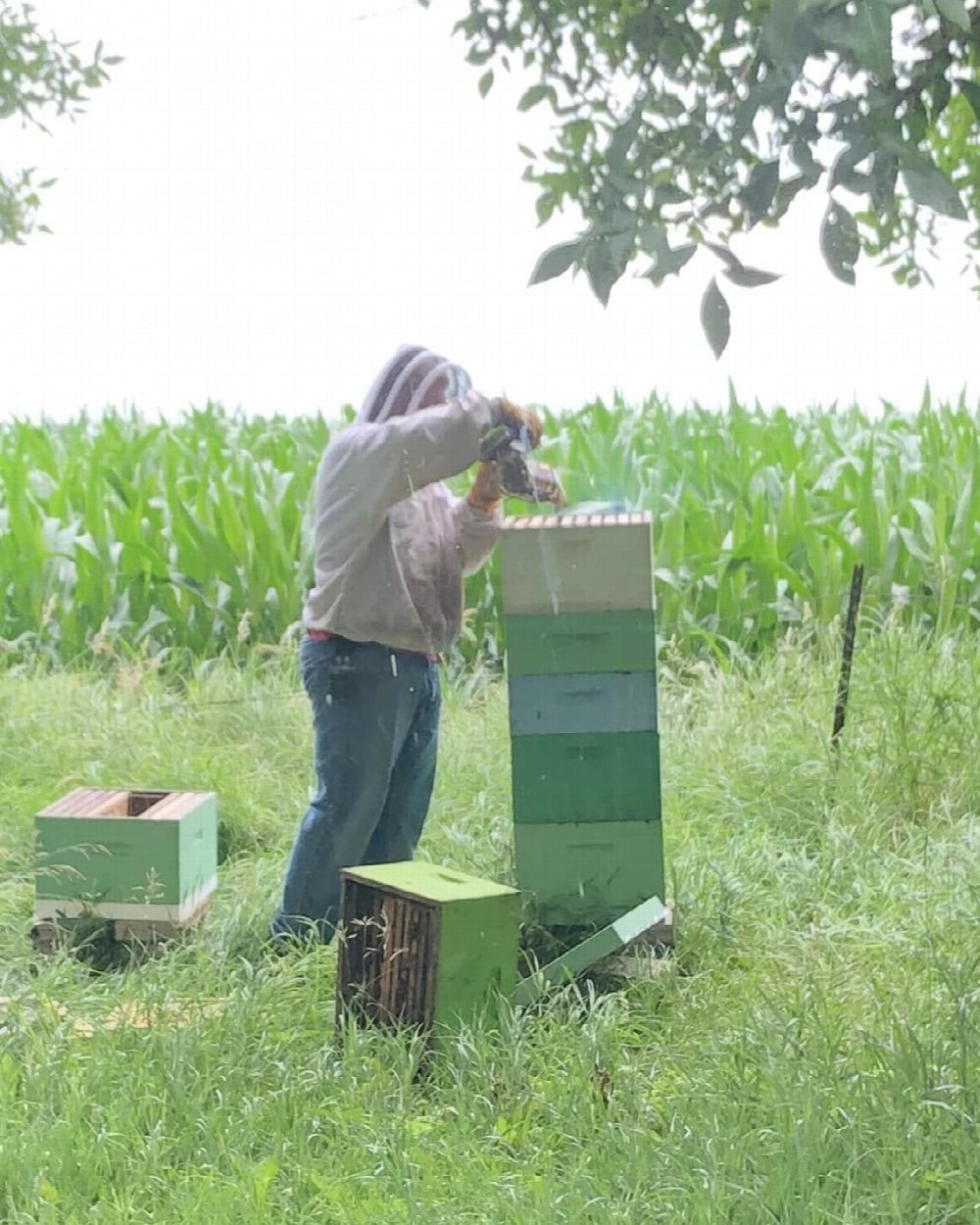
I’m Emmett. My family farms near Latimer, in Franklin County, Iowa, and I keep about 40 hives. We bottle every jar ourselves. Here’s what I’d want you to know about honey, from anyone, mine included.
Real: what “raw” means
Raw honey is honey the way it comes out of the hive. Strained, but not fine-filtered. Not heated. Nothing added.
Most store honey is heated and filtered so it stays runny on the shelf. A lot of it is blended from who-knows-where.
Three things to check on any label:
- Ingredients. It should say one thing: honey.
- Where it’s from. “Product of USA and…” or a list of countries means a blend.
- The fine print on “Iowa” honey. Some honey sold as Iowa honey is sourced from across the Midwest. If it matters to you, check.
Skip the kitchen tests. The water test, the flame test, the thumb test: none of them can reliably tell real honey from fake at home. The surest test is knowing your beekeeper.
That’s me. Meet my family →
Local: honey from right here
Bees work the land a few miles around their hive. Ours forage on local wildflowers, soybeans and clover, and trees like maple and willow, around our farm in Franklin County. That’s what you taste. A warehouse blend can’t tell you that.
My family and I do every step:
- I raise the bees.
- We pull the honey.
- We bottle it, and fill the honey straws on our own machine.
- We stock the store shelves ourselves.
No middleman. No blending. Your money stays here.
Find us at Hy-Vee, Fareway, WizeBiz and Koerner Whipple Pharmacy in Hampton, and Latimer’s Grocery in Latimer. Store owners tell us it’s by far their best-selling local honey. Where to buy →
Iowa and honey
Honey bees aren’t native to North America. They came over with European settlers, and farm families in Iowa have kept them ever since.
By 1912, there were enough beekeepers here to start the Iowa Beekeepers Association. Today it’s the Iowa Honey Producers Association, the group that gave me its Youth Award in 2023.
More than 70% of Iowa’s land grows corn and soybeans. Corn gives bees pollen but not much to make honey from. In summer, Iowa bees work clover and soybean blooms. When those stop flowering, they turn to wildflowers and prairie plants. Iowa State researchers found that hives on farms with strips of prairie made more honey.
Iowa hives still make a lot of honey. In 2025, Iowa beekeepers harvested about 2.1 million pounds from about 34,000 hives. That’s 62 pounds per hive, well above the U.S. average of 48.
Sources: USDA, Honey report, March 2026. Iowa State University Extension, August 2026.
What’s in raw honey
We don’t heat our honey or fine-filter it, so it keeps the pollen and natural enzymes that processing takes out. It can look a little cloudy. It tastes like the flowers it came from, not just sweet.
One ingredient: honey.
Lots of folks buy local honey for allergy season. We can’t promise what it’ll do for you, but we can promise it’s raw and from right here.
Not for babies under 1 year old.
My honey went hard. Now what?
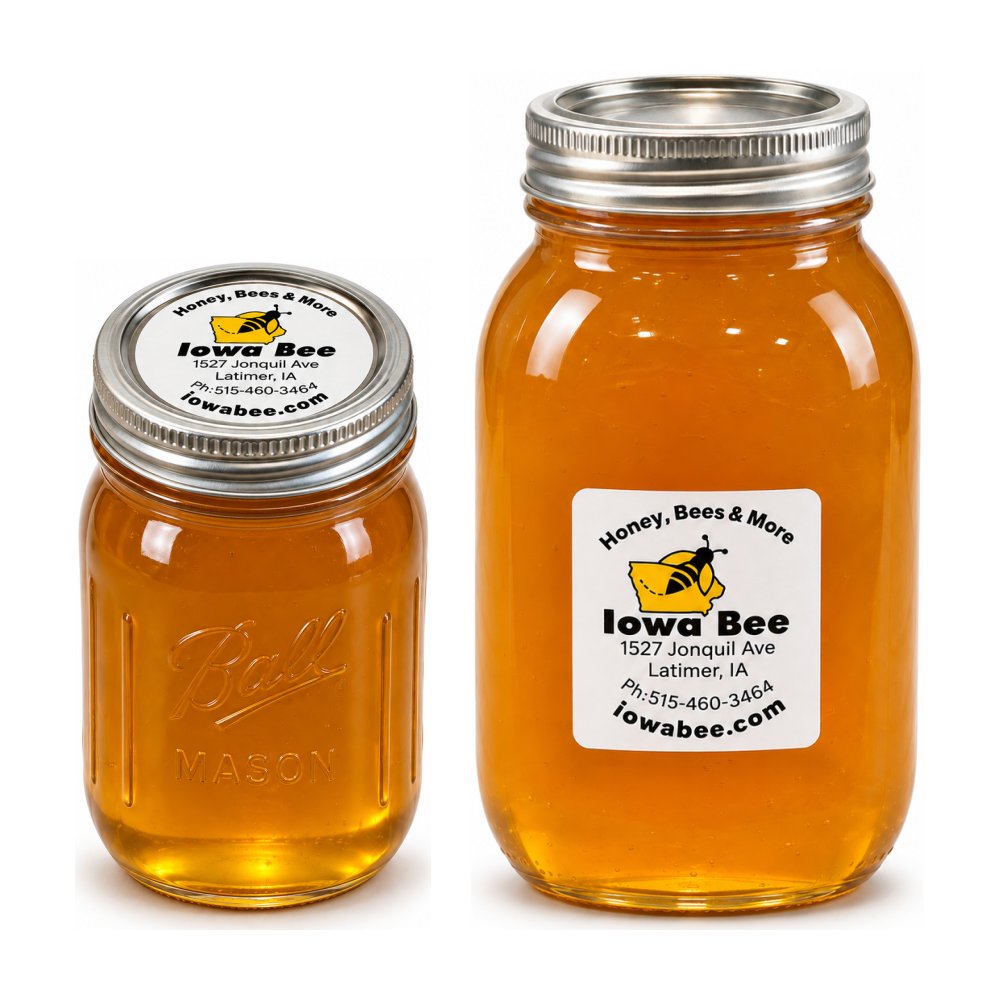
Raw honey crystallizes. That’s normal. Hard honey isn’t bad honey. It’s safe to eat as is: scoop it into tea or spread it on toast. If you want it to pour again:
Glass jar (pint or quart)
- Take the lid off.
- Set the jar in a pan of warm water, about up to the honey line. Warm, not boiling.
- Stir now and then so the middle melts too.
- When the water cools, swap in fresh warm water. Melt it all the way, or leftover crystals start it over.
Plastic bear (12 or 24 oz)
- Open the cap.
- Stand it in warm tap water, not hot, so the bear doesn’t soften or warp.
- Refresh the water as it cools. It takes longer than glass.
- Rock-hard? Scoop what you need into a mug and warm that instead.
Don’t
- Don’t microwave a plastic bear.
- Don’t boil honey or set the jar on a burner. Too much heat darkens it and cooks off the flavor.
- Don’t heat the same honey over and over. Warm only what you’ll use soon.
Keep it from going hard: store it in the cupboard at room temperature, not the fridge. Cold speeds it up. Keep the lid tight.
Taste the difference
“Honey is honey” until you taste it next to the store brand. Customers tell us ours is the best they’ve ever tasted.
Glass or bear, same raw honey.
— Emmett, beekeeper, Iowa Bee
USPS shipping is $10, free over $75. Free farm pickup near Latimer, and free local delivery around Hampton, Latimer, Sheffield, Belmond and Iowa Falls. Details →